
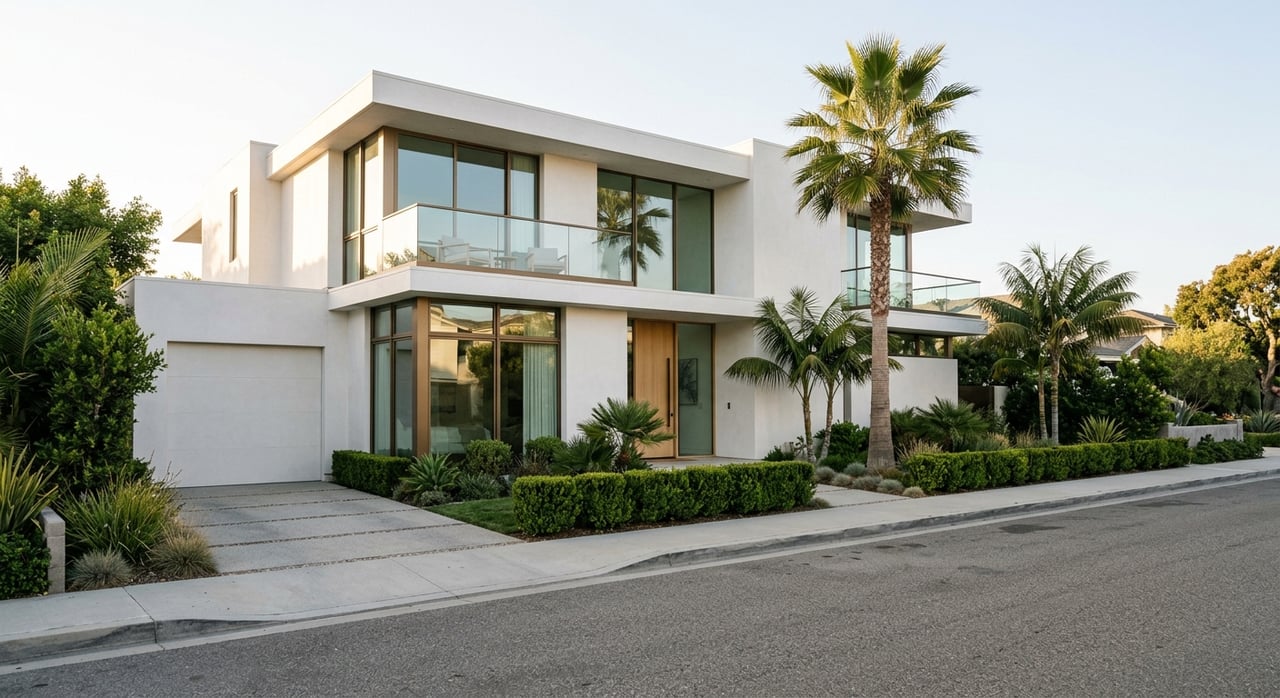
If you are looking at Coquina Sands through a new-construction lens, one truth stands out fast: land value often drives the decision as much as the house itself. In this part of Naples, buyers, owners, and investors are often weighing a simple but high-stakes question: renovate, rebuild, or secure a homesite before supply tightens further. This guide breaks down how lot values are trending in Coquina Sands, what separates an average parcel from a premium one, and which due-diligence items matter most before you move forward. Let’s dive in.
Why Coquina Sands Draws New Construction
Coquina Sands is one of Naples’ most location-sensitive neighborhoods. The City of Naples describes it as a mix of single-family homes on tree-lined streets and condominium buildings along Gulf Shore Boulevard, with close access to Lowdermilk Park and the Gulf. That combination helps explain why redevelopment interest remains strong in this pocket.
Another major demand driver is the nearby Naples Beach Club redevelopment, a 125.4-acre resort and residential project that the city said will preserve 104.6 acres as conservation and open space and include a Four Seasons resort component. For nearby property owners and buyers, that kind of large-scale investment can reinforce long-term attention on surrounding land.
At the same time, buildable land is not becoming easier to find. Collier County property data shows vacant residential parcel counts declined from 16,191 in 2024 to 15,256 in 2025. That countywide trend does not replace parcel-by-parcel analysis, but it does support the broader idea that teardown sites and well-located lots are becoming more scarce.
Lot Values Vary by Parcel Type
One of the biggest mistakes you can make in Coquina Sands is treating the neighborhood like a single pricing bucket. It is not. Gulf-front sites, waterfront lots, and interior teardown parcels behave like different markets, even when they sit within the same neighborhood boundaries.
Current asking prices show a wide spread. At the top end, 1500 Gulf Shore Blvd N Lot 0 is listed at $18.5 million on 0.92 acres and is being marketed as a development site with Gulf and harbor orientation, boat-slip access, and multiple potential uses. That is a very different pricing story from a smaller inland teardown.
Waterfront sites also command a clear premium. 1795 Hurricane Harbor Ln is listed at $6.95 million on 0.44 acres with roughly 150 feet of water frontage, showing how direct water exposure can materially change value even without Gulf-front positioning.
On the interior side, 711 Banyan Blvd is listed at $2.4 million on a 0.23-acre corner lot, and the listing specifically says it is priced at lot value. Meanwhile, 690 Murex Dr is listed at $4.25 million on 0.57 acres and is marketed around the strength of its rare half-acre corner homesite.
A recent land sale helps round out the picture. 670 Murex Dr Lot 15 sold for $3.2 million in 2025 on a 0.4-acre parcel. Because it was a vacant-lot transaction, it offers a more direct signal than an occupied home where the remaining structure may still influence pricing.
What Drives Premium Lot Pricing
In Coquina Sands, raw lot size matters, but it is rarely the whole story. A parcel’s value can shift meaningfully based on factors that affect usability, design flexibility, carrying costs, and long-term appeal.
Water Orientation and Frontage
Water remains one of the clearest value drivers. Gulf-front and harbor-oriented sites sit at the top of the pricing ladder, followed by canal-front or waterfront parcels, then inland lots. Frontage length, water access, and view orientation can have as much impact as square footage.
Lot Shape and Width
Lot width matters because it influences the buildable envelope. In areas where zoning standards and setbacks are strict, a parcel that looks large on paper may still have design limitations. Wider and cleaner-shaped parcels tend to provide more flexibility for modern layouts, garages, pools, and outdoor living spaces.
Flood Zone Position
Flood zone can materially affect rebuild economics. The City of Naples notes that the 2024 Flood Insurance Rate Maps are in effect for construction and insurance, and the city distinguishes between Zone AE, Zone VE, Zone AH, and Zone X. Zone VE is a coastal high-hazard area with wave action, while Zone X is lower risk and does not require flood insurance, though the city still recommends caution.
That is one reason the flood zone note on 711 Banyan Blvd stands out. A lot in Zone X may offer a meaningfully different cost profile than a similarly located parcel in a higher-risk zone.
Redevelopment Potential
The market also rewards parcels that can support a compelling end product. In some cases, that means a modern single-family residence. In others, particularly on larger or differently zoned sites, it may mean broader redevelopment potential.
Teardowns vs. New Construction
Coquina Sands shows a familiar Naples pattern: older homes on desirable lots are often judged first as land opportunities. That does not mean every older home is a teardown, but it does mean buyers and owners often underwrite the parcel before the structure.
The clearest example is 711 Banyan Blvd, where the listing explicitly states the property is priced at lot value. When a property is marketed that way, it usually signals that the buyer pool is focused on the homesite, not on preserving the existing improvements.
On the new-construction side, 1405 Mandarin Rd is a 2024-built home listed at $9.25 million on 0.44 acres. Compared with older or less improved properties, that gives you a useful snapshot of how the market may price a finished modern product when paired with a strong lot.
There are also middle-ground cases. A property like 1675 Murex Ln, noted in the research as a 2003 waterfront residence listed at $5.5 million on 0.41 acres, shows that newer or updated homes can still derive a large share of value from lot quality. In other words, the house matters, but in Coquina Sands, the lot often sets the ceiling.
Key Zoning Rules to Check First
Before you assign a number to any Coquina Sands parcel, zoning deserves close attention. A lot may be attractive in location and size but still present practical limits that affect what you can build.
For many interior single-family homesites, the relevant framework is often R1-15. According to the city’s residential zoning standards, R1-15 includes a minimum lot area of 15,000 square feet, minimum lot width of 100 feet, and a maximum building height of 30 feet, with height measured from specific FEMA, DEP, road crown, or natural grade benchmarks.
That makes lot width and setback planning especially important on teardown candidates. A parcel can appear straightforward until you test the actual buildable envelope against code requirements.
For larger redevelopment sites, the picture can be very different. The city’s multifamily code materials show that districts such as R3-18 and R3T-18 can allow heights up to 75 feet, with an additional 12 feet in certain cases if specific conditions are met. These projects also require site plan review before permits can be issued.
Floodplain Review Can Change the Budget
Floodplain compliance is not just a design issue. It is a budget issue, a timing issue, and in some cases a feasibility issue.
The City of Naples states that almost all permitted development requires floodplain review. The city also notes that Special Flood Hazard Areas are Zones V and A, and that substantial damage or substantial improvement at the 50% threshold can trigger compliance requirements, including elevating the structure to or above base flood elevation.
For buyers and owners deciding whether to renovate or rebuild, this matters a great deal. If improvement costs cross that threshold, your project may shift from a cosmetic update to a much more complex compliance exercise.
Why Neighborhood Averages Fall Short
If you are trying to understand land value in Coquina Sands, broad Naples averages will only take you so far. This is a neighborhood where parcel-level due diligence matters more than simple average pricing.
The strongest framework combines zoning review, flood-zone confirmation, lot dimensions, and nearby land or teardown comps. The City of Naples planning resources can help with zoning map lookup and planning review, while Collier County’s property appraiser data supports more localized sales analysis. The county specifically notes that it uses median sale prices of vacant lot and land sales to help derive neighborhood market unit prices, which is one more reason recent land comps deserve more weight than broad market summaries.
What This Means for Buyers and Owners
If you are buying, Coquina Sands rewards discipline. Two homes may look similar on a search page but have very different value drivers once you account for water orientation, flood zone, lot width, and redevelopment potential.
If you are selling, it is important to know whether your property will be viewed as a residence, a renovation opportunity, or primarily a homesite. That positioning can shape pricing strategy, buyer targeting, and marketing language from the start.
In a neighborhood where a lot-value interior property can sit around $2.4 million and a premier development parcel can reach $18.5 million, precision matters. Coquina Sands is not one market. It is several overlapping micro-markets, and the right valuation process should reflect that.
If you are evaluating a teardown, new build, or high-value homesite in Coquina Sands, a private, data-driven review can help you move with more clarity. The team at Knox Brothers offers discreet guidance for buyers, sellers, and development-minded clients who want to understand where lot value, timing, and opportunity align.
FAQs
What affects lot value most in Coquina Sands?
- The biggest drivers are water orientation, frontage, lot size, lot shape, zoning, flood zone, and redevelopment potential.
Are teardown homes common in Coquina Sands?
- Teardown and land-first analysis are common in Coquina Sands, especially when an older home sits on a well-located or oversized parcel.
How important is flood zone for new construction in Coquina Sands?
- Flood zone is very important because it can affect insurance, design requirements, elevation standards, and total construction cost.
What zoning should you check for a Coquina Sands homesite?
- For many interior single-family parcels, R1-15 is a key zoning category to review, including minimum lot area, width, setbacks, and height limits.
Why are neighborhood averages less useful in Coquina Sands?
- Neighborhood averages can miss major differences between Gulf-front, waterfront, and interior lots, so parcel-specific analysis is usually more reliable.