
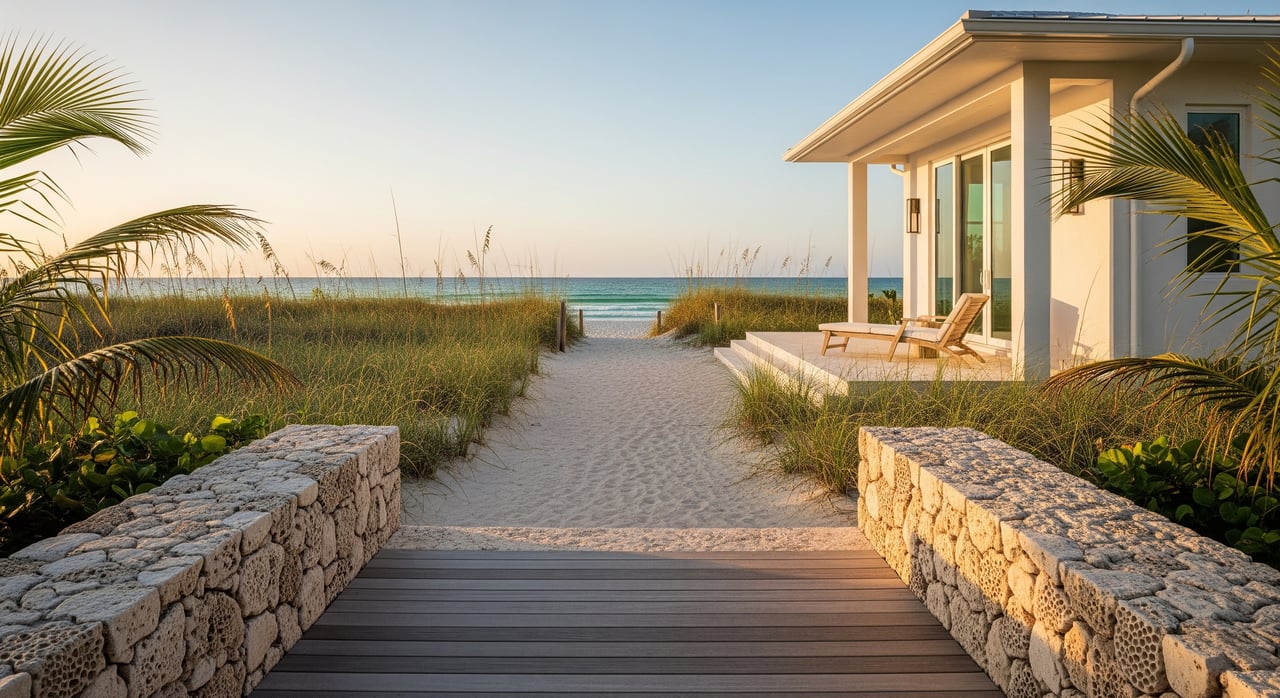
How much more is a home or condo worth when you can stroll to Lowdermilk Park in a few minutes? If you are buying or selling in Coquina Sands, you hear “walk-to-beach” a lot, but the premium varies widely from block to block and even within the same building. In this guide, you’ll learn how distance, view, elevation, route quality, and ownership costs work together to shape value. You’ll also get a simple, data-forward way to price or buy with confidence. Let’s dive in.
What drives the premium
The walk-to-beach premium in Coquina Sands is about convenience and experience, not just distance. Buyers pay up for the shortest, safest, and most direct routes to the sand. They also value view, privacy, and outdoor living space.
Key drivers include:
- Directness of access: Is the route flat, short, and safe, or indirect with street crossings? Check the closest entries to Lowdermilk Park on the official City of Naples Lowdermilk Park page.
- Visual amenity: Direct Gulf views carry the largest boost, followed by partial or side views. Views often outweigh proximity alone.
- Buyer profile: Second-home and vacation buyers tend to pay larger premiums for immediate access and views than purely investment-driven buyers.
- Property type: Upper-floor condos with Gulf sightlines and single-family homes on larger parcels see bigger premiums than similar inland units.
- Risk and regulation: Flood zone, elevation, insurability, and coastal rules matter to both buyers and lenders.
- Supply constraints: Coquina Sands is small, and limited near-beach inventory can amplify premiums when demand is strong.
Distance bands that matter
Use actual walking routes and time, not straight-line distance. Google Maps walking mode usually works for these short routes.
Band A — Beachfront or direct Gulf-front
- Premium vs. inland: very large and often far above near-beach units.
- Comp approach: compare only to other oceanfront or the closest non-oceanfront with careful adjustments for lot width, elevation, and setbacks.
Band B — Immediate walk, 0 to 0.1 mile (about 1 to 5 minutes)
- Typical premium over farther inland comps: +15% to +40%.
- Use the upper end for partial views, very short level routes, or direct paths to the beach or boardwalk.
Band C — Short walk, 0.1 to 0.25 mile (about 5 to 12 minutes)
- Typical premium: +5% to +20%.
- Use lower numbers for indirect routes or busy crossings.
Band D — Walkable but farther, 0.25 to 0.5 mile (about 12 to 20 minutes)
- Typical premium: 0% to +10%.
- Many buyers stop paying for proximity beyond an easy 10-minute stroll.
Band E — Beyond 0.5 mile
- Generally no meaningful walk-to-beach premium; other features drive value.
Refine within the bands
- Start in the same building or block. If two condo sales differ mainly by floor and view, use the per-square-foot gap as your baseline view or access premium.
- Use multiple nearby comps across Bands B to D to model a smooth decline in premium as distance increases over time. Prioritize sales from the last 6 to 12 months.
- When samples are thin, a per-unit reality check can help. In high-demand micro-markets, an immediate-walk location can add roughly $100k to $400k versus a similar unit farther inland, but confirm with recent local solds.
Property type and unit factors
- Condos: Upper floors with Gulf sightlines, elevators, and private parking can earn higher per-square-foot pricing. Balance the premium against HOA dues, special assessments, and insurance structures that affect monthly costs and net value.
- Single-family homes: Expect larger absolute premiums because buyers value the lot and outdoor space alongside proximity and any view. Orientation to access paths and elevation are critical.
- Floor level and orientation: Upper-floor partial views can beat lower-floor units without a view. Ground-floor units may trade view for private yard or patio access, which some buyers prize.
- Rental potential: If a building allows short-term rentals, investor demand can lift list prices. Always confirm HOA rules and realistic yields before underwriting a premium.
Micro-location nuances
Small differences in Coquina Sands can change value quickly.
- Access points: Being 30 to 60 seconds closer to a marked Lowdermilk access can matter, especially for vacation and multi-generational use.
- Street type and noise: Proximity to park parking or busy entry plazas can add traffic and reduce privacy. Convenience can be offset by noise during peak season.
- Sun and breeze: Western exposures with sunset views are prized by many lifestyle buyers.
- Elevation and setback: Two properties the same distance from the park can price very differently if one sits higher or behind a protective dune.
- Outdoor space: A large private yard, terrace, or roof deck can substitute for some view premium.
- Sidewalks and safety: A flat, shaded sidewalk with crosswalks is more valuable than a narrow shoulder, even at the same distance.
Risks and costs to weigh
Coastal ownership costs and regulations can change net value.
- Insurance: Flood and wind premiums are rising. Elevation, mitigation features, and documentation can meaningfully affect insurability. Verify zones with the FEMA Flood Map Service Center.
- Coastal rules: Sea turtle lighting and dune management can limit exterior lighting or certain improvements near the beach.
- Market cycles: Near-beach assets often lead in strong cycles but may correct faster in weak periods.
- Financing: Cash often dominates at the highest end. Appraisal and lender rules tied to flood risk can cap financed buyers’ pricing.
- Rental seasonality: If income matters, model realistic occupancy and expenses using local season patterns.
Price or buy smart
Use a simple, evidence-based workflow to value a beach-walk location in Coquina Sands:
- Measure the route
- Use Google Maps walking mode to time the actual path to Lowdermilk Park. Confirm on-site and look for shortcuts or private paths. The City of Naples Lowdermilk Park page helps you verify entry points.
- Pull recent solds
- Focus on the same building or immediate blocks from the Gulf Coast MLS. Note sale date, price, DOM, beds, baths, floor, view, walking time, lot size, HOA fees, parking, and any concessions.
- Verify lot and building facts
- Confirm parcel details and legal descriptions through the Collier County Property Appraiser. Record SF, dimensions, and any easements.
- Check flood and elevation
- Pull the FEMA zone and any available elevation certificates via the FEMA Flood Map Service Center. Insurance and lending depend on this.
- Adjust for beach proximity
- Apply the distance bands above. Use view, route quality, and elevation to set a conservative and an assertive premium and test both against recent solds.
- Adjust for monthly costs and rules
- Factor HOA dues, special assessments, master insurance, rental restrictions, and any sea turtle lighting or exterior rules that affect utility or guest use.
- Reconcile a range
- Express value as low, probable, and high. Align the final ask or offer with your timing goals.
For broader market context as you reconcile, review local trends through NABOR market statistics and trusted local reporting like the Naples Daily News for seasonal demand signals.
When seconds shift value
In a small neighborhood like Coquina Sands, small time differences add up. A condo that is 3 to 4 minutes from a marked beach entry may not achieve the same premium as a comparable unit 60 to 90 seconds away with an easy, shaded sidewalk. Likewise, two similar homes can diverge in pricing if one route requires crossing a busy street while the other does not. Always test actual walking experience at different times of day.
Why timing matters
Premium buyers act quickly in high-demand windows. Immediate-walk and view properties often see shorter days on market and lower discounting when the season is active. In quieter periods, pricing discipline and patience can be required, especially for assets that rely more on proximity than on view.
Work with a discreet advisor
If you want to quantify the walk-to-beach premium for your specific property or target block, a private consultation can save time and protect negotiating leverage. We combine local solds, micro-location analysis, and cost-of-ownership checks to price with confidence and launch with precision. When you are ready, connect with the Knox Brothers. Schedule Your Private Consultation.
FAQs
How much is the walk-to-beach premium in Coquina Sands?
- Within 0 to 0.1 mile you often see about +15% to +40% versus farther inland comps, 0.1 to 0.25 mile about +5% to +20%, and 0.25 to 0.5 mile about 0% to +10%, with views and route quality shifting where a home lands in those ranges.
Which adds more value in Coquina Sands, view or proximity?
- Gulf views typically command a higher premium than proximity alone, though a very short, safe, and level route still carries significant value for vacation and second-home use.
How do HOA fees and insurance affect net value near the beach?
- Higher monthly HOA dues, special assessments, and elevated flood or wind premiums can reduce what buyers are willing to pay, so always balance any proximity or view premium against true monthly costs.
How do appraisers handle walk-to-beach adjustments?
- They generally start with the most similar comps by building or block and then adjust for floor, view, and documented walking route and time, using recent local sales to bracket a low, probable, and high value range.
What is the best way to verify flood risk in Coquina Sands?
- Look up the property’s FEMA zone and maps via the FEMA Flood Map Service Center and request any available elevation certificates to understand insurance and lending implications.
Are homes closer to Lowdermilk Park noisier or harder to park by?
- Some micro-locations near public parking or entry plazas can experience more traffic and noise during peak periods, which may offset a portion of the access premium for privacy-focused buyers.